
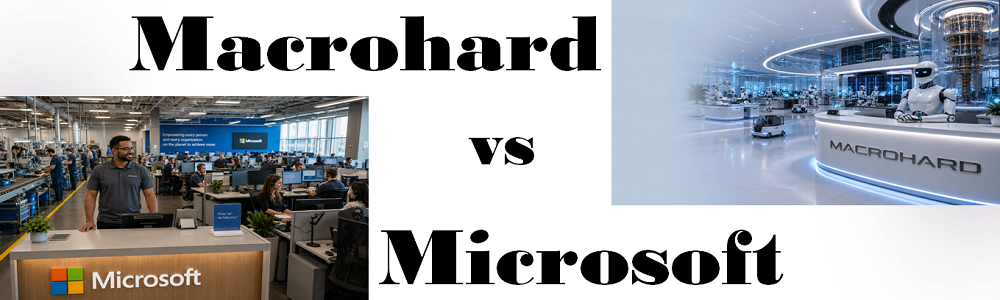
When Elon Musk first floated the name Macrohard in 2021, many people laughed. It was an obvious play on words. Microsoft. Macrohard.
Classic Elon. Except... Elon Musk has a habit of turning jokes into billion-dollar businesses.
He joked about selling flamethrowers. Then he sold tens of thousands of them. He joked about launching a car into space. Then he did exactly that. He joked about buying Twitter. Then he bought it.
So when news broke that Macrohard had become a real AI initiative on August 1st, 2025 and the name had been registered and trademarked, people stopped laughing quite as much.
Because if history has taught us anything, it's this:
When Elon jokes, it's often the beginning of something much bigger.
The Pattern
Think about what Musk has accomplished over the last two decades. He helped transform electric vehicles from a niche idea into a global movement.
He forced the auto industry to rethink its future. He dramatically lowered the cost of launching rockets and changed the economics of space travel.
He bought one of the world's largest social media platforms. He launched one of the fastest-growing AI companies in the world.
Love him or dislike him, it's difficult to ignore the pattern. He tends to pursue ideas that most people believe are impossible... until they aren't.
8 Minute Video
His Rise To The Top
It was the year 2020 – Elon’s name did not appear in the Forbes “Top 10 richest people in the world” list. He was added to that list in 2021. And just five years later – on June 12, 2026, when SpaceX began trading on the Nasdaq, Elon Musk became the world’s first Trillionaire. Is this a ‘Roger Bannister’ moment? Or just a flash in the pan? Only time will tell.
Why Macrohard Matters
The stated vision behind Macrohard isn't simply to build another chatbot. The long-term idea is much larger. Imagine AI systems that can work together like an entire software company.
Software engineers. Project managers. Quality assurance. Technical writers. Customer support. Marketing. Sales. Thousands of AI agents collaborating together.
Today that sounds ambitious. Twenty years ago, so did landing reusable rockets.
Look at the Numbers
Microsoft employs more than 220,000 people. The largest software companies in the world collectively employ well over 2.5 million people.
Now broaden the picture. Think about software professionals working inside:
- Banks
- Hospitals
- Manufacturing companies
- Insurance companies
- Government agencies
- Retailers
- Consulting firms
- Technology contractors
Worldwide, there are an estimated 30 to 35 million software developers, and the broader software and IT workforce likely exceeds 50 million people.
No one is suggesting AI replaces all of them. But what if AI eventually handled 10% of today's software work? Or 25%? Even those numbers would reshape millions of careers.
We've Been Here Before
I'm old enough to remember when people said they would never own a personal computer. Then they did.
I remember when people said the Internet was just a fad. Then every business needed a website.
People refused to enter their credit card online. Today millions of people pay nearly every bill from their phone.
Every major technology revolution feels uncomfortable while it's happening. Then one day it simply becomes normal.
This Isn't About Fear
I'm not saying this happens tomorrow. I'm not even saying it happens five years from now. No one knows.
But if you're planning your career... If you're raising children... If you're helping grandchildren prepare for the workforce they'll enter 15 or 20 years from now... These are conversations worth having.
The winners of every technology revolution haven't necessarily been the smartest people. They've usually been the people who recognized the change early enough to adapt.
Maybe Macrohard becomes one of the biggest AI companies in history. Maybe it doesn't. But the bigger story isn't whether Elon Musk succeeds.
The bigger story is that the world's brightest technology leaders are all racing toward the same destination. And when that many brilliant people begin running in the same direction...
It's usually worth paying attention.